Category Archives: golf

No Substance to Reader’s Complaint

“Where have you been?” asks a reader from Peculiar, Mo. “Geoff Shackelford posts more in a day than you give us in a month.”

The reader, of course, couldn’t be more wrong. My Top 50 Blog is all about the adjacent list, and the list is constantly being updated by the Cal Sci math department. Last Saturday, for example, the Carne Golf Links of Belmullet, Ireland, briefly snatched the No. 2 ranking from the Augusta National Golf Club of Augusta, Ga. Yesterday, the new Machrihanish Dunes course on Scotland’s Kintyre Peninsula surged to No. 50, only to be beaten back by the Nairn Golf Links, a well-regarded Highlands course that will host the 2012 Curtis Cup matches. And now, in just the past two hours, those four courses have reverted to the ranks they held last Friday. Had the reader been paying attention, she would have spotted the activity and held off on her nagging e-mail.

My “columns,” as I like to think of them, are a different matter. I try to knock one out on at least a monthly basis, but I lead a busy life. In addition to my SI/GOLF/Golf.com duties, I serve on two Presidential commissions, take occasional gigs as a hotel-lobby jazz pianist, coach a parochial-league basketball team, assist several NBA teams with their draft choices, serve as official photographer for the Missouri Snipe-Hunt Association and  — on doctor’s orders — play golf as often as I can. Finding time to craft these columns is difficult, and readers‘ complaints don’t make it any easier.

Did I mention how much I travel? I spent the last three weeks in Scotland and Ireland checking up on several of the Top 50’s links courses. After each round I filled out the 22-page Top 50 course-rating form and mailed it off to the States, a procedure that took from two to four hours. (The longer time was for top-ranked Askernish Old, where the backup generator didn’t always kick in when the clubhouse windmill slowed.) Many of these rounds lasted until well past ten p.m. with hours of paperwork to follow, so no one, least of all my wife, should be surprised that I had to bang on a farmhouse door at 1 a.m. on the Herbridean island of South Uist to get the key to the front doors of the Borrodale Hotel, which was inexplicably locked.

That said, I hope to post several brief course reports in the next few days. They may not satisfy the reader in Peculiar, but they should go over well in Normal, Ill.

1 Comment

Filed under golf

Rolex Jumps on Top 50 Bandwagon

Reading the foreword to The Rolex World’s Top 1000 Golf Courses — which has appeared, as if by magic, on my desk in the press tent at the Open Championship in St. Andrews, Scotland — I find myself blushing with false modesty. In the just-published volume’s “Dear Golfers” opener the watchmakers boast that their book, which weighs about as much as a loaded picnic hamper, took three years to complete.

“We have a network of over 200 ‘inspectors,’” the minutemen continue, “composed of enlightened amateurs, professional golfers and journalists specializing in golf course architecture. They have anonymously worked their way around the golfing world, completing an in-depth questionnaire and adding incisive and personalized comments of their own. Our Editorial Committee has given each course a score, geared primarily to the excellence of the site, the course architecture involved, and of course maintenance and condition. After considerable deliberation and verification, we took the entire 33,000 courses currently registered worldwide and ended up with those we consider to be the Top 1000.”

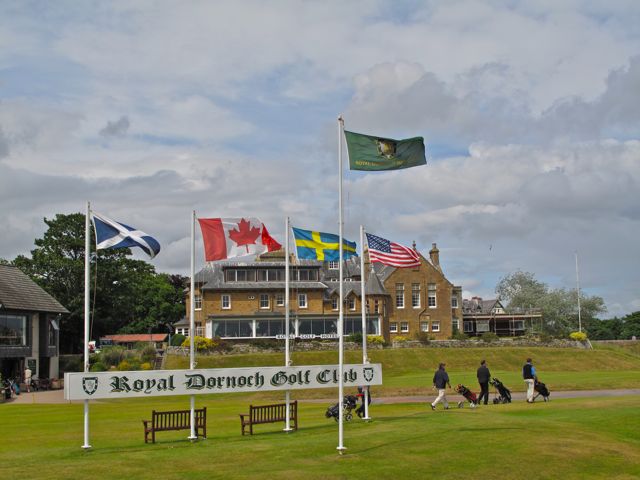
Royal Dornoch Golf

Royal Dornoch rated a mere 95? Really? (John Garrity)

This, of course, is pretty much the modus operandi of The Top 50, so I accept Rolex’s imitation as the sincerest form of flattery and wish them the best as they attempt to catch up.

But now I read the next paragraph.  “For the first time in the history of golf,” the sundial salesmen crow, “a genuine world ranking has been established; like all rankings it is of course subjective but it is the result of unbiased and independent opinion with no commercial pressure.”

This preposterous claim is easily debunked. The Top 50 has been cranking out genuine world rankings since July of 2007, when, by the watchmaker’s own account, they were still looking up courses on MapQuest. Furthermore, Rolex concedes that its rankings are subjective — unlike the Top 50, which concedes nothing. As for the claim that their ratings are reached “with no commercial pressure,” I can only tip my hat in admiration. Like the Times Square huckster with a hundred watches pinned to the lining of his raincoat, Rolex cranes its neck looking in all directions and finds no corporate involvement.*

*Nothing in this paragraph should be interpreted as a criticism of Rolex, valued sponsor of the biennial Writers Cup matches between teams of golf writers from the United States and Europe.

Those points aside, I give the editors credit for compiling an impressive catalog of meritorious golf courses from all corners of the admittedly spherical earth. In addition to course addresses, phone numbers and dress codes, Rolex provides altitudes and GPS coordinates. (For example, the Moonah Links Legends Course in Fingal, Australia,  sits at an altitude of 15 meters at 38˚24‘24.27” S 144˚51‘14.68” E — information that would have kept me from missing my tee time on my last trip Down Under.) Rolex also designates a “signature hole” for each course — an important detail if you send a lot of COD packages to golfers.

As for the Rolex rankings themselves, what can I say? First of all, they aren’t true rankings. To avoid hurt feelings, the Editorial Committee scored the courses in five-percentile blocks, corralling the top 15 into the “100” category, the next 73 into the “95” category, and the rest of the sorry lot into “90s,” “85s,” “80s,” and “75s.” It’s an original scheme, but you wind up with a 73-way tie for sixteenth that puts Pebble Beach, Pinehurst No. 2 and Prairie Dunes on the same level. (Their scientifically-accurate Top 50 ratings are 6, 51, and 7, respectively.) Furthermore, Rolex’s top-15 reads like an tardy schoolboy’s test paper, correctly guessing only three courses from the Top 50 blog (Augusta National, Cypress Point and St. Andrews Old Course), while canonizing Top 50 no-shows such as Bethpage Black and Torrey Pines South.

The real problem with the Rolex Thousand is that they published it. I love hardcover books as much as the next man — if the next man is Johannes Gutenberg — but I don’t take my grocery lists to the bindery. Golf course rankings, to be meaningful, must be updated every few hours, and only the Top 50 performs this valuable service. Rolex, having to meet printers’ deadlines, doesn’t even mention the new Castle Stuart course in Scotland. The Top 50, attuned to the digital age, has the Highlands masterpiece at No. 10.

Still, I give the Rolex 1000 a solid 95 for effort. It’s not their fault that the Top 50 is a perfect 10.

(10-4.)

Top 50 on TV: The tour pros are still hogging the tee times on the St. Andrews Old Course, No. 16, as I type this on a breezy Sunday afternoon in the Kingdom of Fife. Fortunately, there are three other Top-50 courses within easy driving distance of the R&A clubhouse. (The Balcomie Course at Crail, the Torrance Course at St. Andrews Bay, and Kinghorn.) And that doesn’t include the wonderful Kingsbarns Golf Links (alt. 30 feet), which will debut in the Top 50 as early as next week, pending resolution of drainage issues at Catch Basin, our Kansas City headquarters.

Leave a comment

Filed under golf

Castle Stuart: Still Lookin’ Good

A reader from Lake Lotawana, Mo., has a question about tenth-ranked Castle Stuart, the brilliant, one-year-old links course on Scotland’s Moray Firth. “A few months back,” he writes, “you wrote that the Castle Stuart clubhouse has the best men’s room view in all of golf. But you didn’t back up your claim photographically, and you left the impression that Castle Stuart’s high ranking was based solely on clubhouse amenities.”

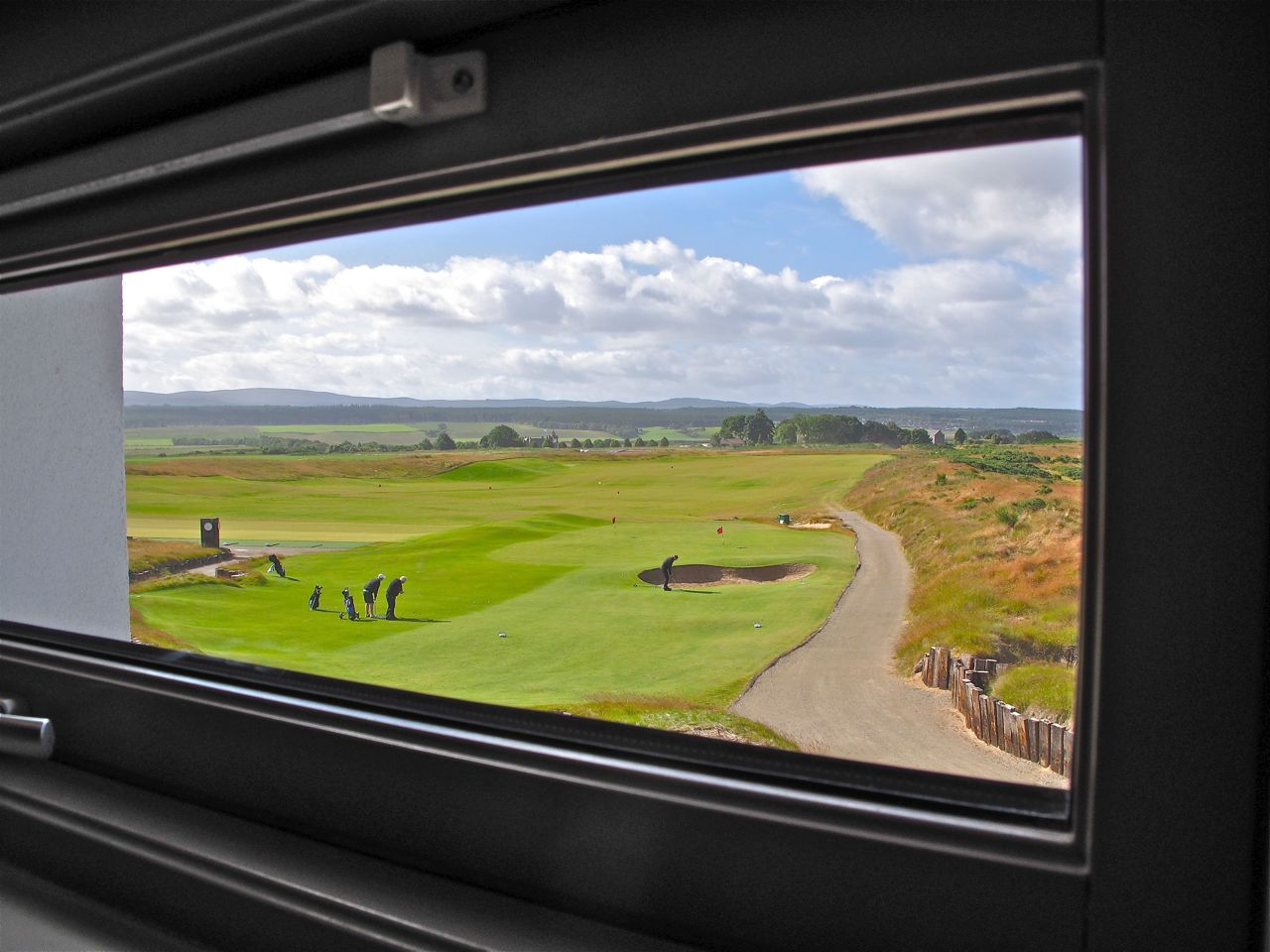
I’ll address the reader’s points in order. First, the claim that Castle Stuart’s lavatory view is unsurpassed. The Top 50 staff photographs the clubhouse and halfway house interiors of all our ranked courses, and if the facility has windows we document the view from every window. We can’t publish all these photos, obviously, so we go by the old adage, “A thousand words is as good as a picture.” I described the view from the Castle Stuart men’s loo. That seemed, to me, to be sufficient. But if my correspondent needs to have it spelled out for him in pixels, here is a selection of photos taken from the second-floor men’s lavatory of the Castle Stuart Golf Links.

Lavatory view

Castle Stuart's 9th green, as seen from the clubhouse lav. (John Garrity)

View of driving range

The Castle Stuart driving range from the men's shower room. (John Garrity)

9th Green Castle Stuart

Close up of 9th green from loo. (John Garrity)

Panoramic photo

Panoramic loo view, Castle Stuart Golf Links. (John Garrity)

The second point of the e-mail, implying that we ignored the Gil Hanse/Mark Parsinen golf course in our evaluation of Castle Stuart, is totally off the mark. No course in the Top 50, with the obvious exceptions of Sand Hills and Cypress Point,* achieved its elite ranking until it had been played by yours truly, either anonymously or (in the case of courses with outrageous green fees) not. Just last week, in fact, I played Castle Stuart in conditions that some would call extreme — wind gusts of 75 miles per hour — and left convinced that Inverness is home to the greatest new links course in the British Isles and one of the top ten golf courses in the world. It would not surprise me to see Castle Stuart, given a year or two to mature, to wind up in my top three with Askernish and Carne.

*And a couple of others.

I’m not the only one to be enchanted by Castle Stuart. Golf Digest managing editor Roger Schiffman, who played it last week as a member of the U.S. Writers Cup team, used words like “unforgettable … magnificent … stunning … beguiling … arresting …,” stopping only when he forgot whether he was describing the course or the barmaid in the third-floor lounge. George Peper, the author and former GOLF Magazine editor, calls Castle Stuart “the most significant British Isles debut since Loch Lomond in 1993 …. Think Pebble Beach, Pacific Dunes, Royal County Down …. restrained, insightful design combined with a breathtakingly beautiful site ….” Since I arrived in St. Andrews for this week’s Open Championship, I have been approached by total strangers asking if  I have played the new Highlands course that rivals or even surpasses Royal Dornoch Golf Club. “You’ll be blown away,” one of them told me, unaware of the irony.

So, here’s what I’ve got to say to that reader in Lake Lotawana and anybody else who thinks he or she can trip up the Top 50 staff: Forget it. When it comes to golf courses, we cover all the basins.

Top 50 on TV: The one, the only, Old Course at St. Andrews, Scotland. The 139th Open Championship begins tomorrow morning on the Fife muny, which is the only God-designed course in the Top 50. The Bottom 50, however, features the unforgettable Ft. Meade City Mobile Home Course Golf Course of Ft. Meade, Fla., which is reputed to have been built by God, Jr., with help from his brother Rees.

Leave a comment

Filed under golf

Confused Carne Correspondent Strays into Legendary Dublin Pubs

I was preparing to write a few lines about the wonderful CordeValle Resort Golf Club, No. 50, when the chime rang and Woodcock ran in with the latest dispatch from our chief Irish course rater, David McCormick. McCormick, a New Yorker, moonlights as my literary agent, but his real passion is golf. Or at least I thought so until I read the synopsis of his recent trip. “I played 36 holes each day except Saturday,” he wrote, “when I went into Dublin (instead of playing Portmarnock Golf Club) to see the sights and meet a friend.”

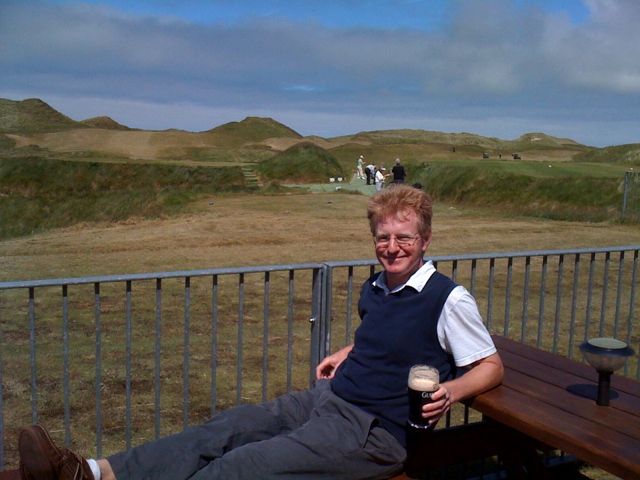
McCormick at Carne Golf

Course rater David McCormick, in an obviously doctored photo, at Carne Golf Links, Ireland. (John Garrity)

Instead of playing Portmarnock? Turning to Woodcock, I quipped, “Those must be some sights, and that must be some friend.”* In any event, the absence of fresh data on the eight-time Irish Open venue forced me to move course-designer/golf pro Eddie Hackett’s longtime workplace to No. 4 on the Top 50 Contingency List, behind The Country Club at Brookline.

*Showing that he’s the consummate professional, McCormick submitted a concise and sober report on his Dublin frolic: “Almost every pub I passed or went into had the U.S. Open on the big screens. It was fun to watch with such passionate golf fans, and with McDowell in the chase the pints were plentiful.”

To be fair, we sent McCormick to report on courses in the scenic northwest counties of the Irish Republic. And report he did. “Well, I fell in love with Murvagh Golf Club, a course in Donegal. Played it in the morning with two members from near Belfast and in the afternoon with a young Irishman living in England, who was home for a golf holiday. Murvagh is just a sweet layout. Doesn’t have the elevation extremes of Carne, but it’s deceptive and, when the wind kicked in, quite challenging. I loved the County Sligo Golf Club*, too. Very stately and many memorable holes. Their #17, the number-1 handicap hole — long, blind, uphill, with a second shot to a sloping green — is not as hard as Carne’s 17th, but I bogeyed it both times.”

*Also known as “Rosses Point.”

David’s multiple references to the Carne Golf Links, No. 3, comes as no surprise, as the Hackett-designed Mayo landmark is the benchmark for untamed Irish links courses. “Carne is extraordinary,” David continues. “Also, they were incredibly kind to me — comped my golf and my hotel, wouldn’t even let me buy lunch. I played with Eamon Mangan*, John Healy and Noel Reilly, this year’s captain of the Belmullet Golf Club. Very nice gents. I also met Edmund McAndrew, who told me about a somewhat eccentric guy named Geraghty who comes in to the post office to pick up his pension dough and is clearly a relative of yours.”**

*For more about Mangan, who worked with Eddie Hackett on the design and construction of Carne, read my book, Ancestral Links: A Golf Obsession Spanning Generations, available online and at better bookstores on both sides of the Atlantic.

** All of the Geraghtys are eccentric, and they’re all relatives of mine.

“Eamon also took me on a tour of the new nine, and that was a total treat. I think you or somebody — Chip McGrath? — should write a piece on the building of that nine, working with the architect [Jim Engh], but also telling how the locals have taken matters into their own hands in lots of interesting ways. There aren’t too many stories (or new courses) like it, as you know.”

David sounded only two false notes in his Carne report. Here’s the first: “The weather was perfect.” (To back up this absurd claim he sent a terabyte of photographs showing Carne’s fairways as parched and brown as a hillside in Sudan. Amazing what you can do with Photoshop!) Here’s the second: “I told Eamon I’d help spread the gospel of Carne.” That, of course, would violate the Top 50 Code of Acceptable Practices. Personally, whenever I praise an agreeable links such as Carne or Askernish — as, for instance, when I call either or both of them “the greatest golf course in the world” — I am careful to point out that the Top 50 is the last word in course rating, and thus immune to subjectivism and bias.

Lodging Tips: The spiffy Broadhaven Bay Hotel in Belmullet is by far the best choice for Carne-ivores, but architect Engh swears by the old Western Strands Hotel, a just-off-the-square inn with good food, closet-sized rooms, and a warm and cheery pub. For both charm and scenery, however, you can’t beat Terry and Francis McSweeney’s four-star Stella Maris Hotel, which is an hour’s drive up the coast, between the towering North Mayo Cliffs and Downpatrick Head. “I had a very nice night and a delicious dinner at the Stella Maris,” David McCormick wrote in a post script. “Oh, and Terry says hi.”

1 Comment

Filed under golf

Top 50 Magnate Enjoys Monterey

MPCC

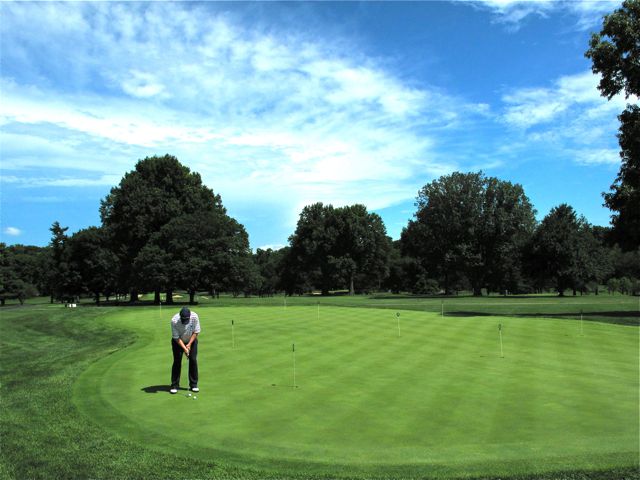
MPCC member Steve John demonstrates the balanced finish. (John Garrity)

Rating courses need not be a tedious, joyless process — “a good walk spoiled.” I try to set an example for my course raters by leaving Top 50 headquarters from time to time to play golf on the world’s finest layouts. That was the case last week when I squeezed in a few rounds on the Monterey Peninsula while attending the U.S. Open at Pebble Beach Golf Links.* Two of the courses I played are in my recently-updated Top 50, and the third, Preserve Golf Club of Carmel, Calif., is No. 51 with a bullet.

*Our panel of experts is still reviewing Graeme McDowell’s slapdown of Ernie, Tiger and Phil to see if Pebble’s No. 7 ranking needs to be re-evaluated. We will examine Woods’s complaint about the greens (“The holes weren’t cut where I rolled my putts”) and Dustin Johnson’s observation that “the second hole has too many left-handed bunkers,” and if we reach a consensus, we’ll post it.

Tuesday morning’s round at magnificent Monterey Peninsula Country Club, No. 49, was arranged by Sports Illustrated senior writer Alan Shipnuck and MPCC member Steve John. The foursome consisted of myself, John (not myself), SI senior writer Damon Hack and Stephanie Wei, author of the popular “Wei Below Par” golf blog. None of us, I’m happy to report, hit a bad shot all day.

Stephanie Wei

Body English works! Wei's shot wound up 12 feet from the hole. (John Garrity)

We played the Shore Course, which was recently restored to the three-course rota of the AT&T National Pro-Am at Pebble Peach, and I share the opinion of the pros who played it in February: The Shore is a definite upgrade from unranked Poppy Hills Golf Course and a worthy successor to scenic Cypress Point Golf Club, No. 13. In fact, the only explanation I can offer for its 49th-place ranking is a prohibited payoff from partisans of the nearby Spyglass Hill Golf Course.*

*Payments to my course raters are not tolerated. Inducements to me are reviewed on a case-by-case basis.

Halfway House at MPCC

MPCC's halfway house: Golf's best snack-bar view. (John Garrity)

To cite just one example, the view from the halfway house at MPCC is second-to-none. The snack bar itself — manned, I believe, by a winner of Gordon Ramsay’s Hell’s Kitchen reality show — is currently No. 14 on the Junk Food Network’s America’s Top Frankfurters list. (My hot dog came split and grilled on a buttered-and-toasted bun. Magnifique!) Best of all, the grill man packed our sandwiches in seagull-resistant cardboard carriers that fit perfectly into the dashboard compartments of our golf carts. As a result, MPCC gets 180 bonus points for its cypress trees and an additional 50 points for the halfway house.

Top 50 Note: Last week, the USGA announced that it had awarded the 2017 U.S. Open to Erin Hills Golf Course of Erin, Wisc. I am head-over-heels happy for the co-designers, my good friends Michael Hurdzan, Dana Fry and (especially) Golf Digest architecture editor Ron Whitten, who proved that writers can hold their own against the top designers when given an adequate budget and unlimited authority. But I don’t understand how a new golf course, which just recently broke into my top 100, got the Open over perennial Wisconsin trendsetters Whistling Straits, No. 18, and New Richmond Golf Club, No. 25. I’m not crying foul, but I invite David Fay & Co. to consult me before they extend any more invitations to untested golf courses. (Keep the faith, Medicine Hole!)

Leave a comment

Filed under golf

Watson Wins the Watson in KC

Heavy rains over the weekend have again wreaked havoc upon the basement computer room at Catch Basin, our Kansas City headquarters. Fortunately, we didn’t repair the baseboards after the last cloudburst, so the monetary damage is slight.

Tom Watson

Watson successfully double-defended on Sunday. (John Garrity)

No such luck for Kansas City Country Club, currently ranked No. 51 on the Top 50. Tom Watson’s home course was declared “unplayable” on Monday morning, forcing tournament officials to cancel the final round of the Watson Challenge.* The same officials then handed Watson a check for $10,000, it being the local custom to compensate winners no matter how bad the weather.** “It’s too bad we didn’t get to play 54 holes,” Watson told reporters before hopping on a plane to Monterey, Calif., for a satellite tournament at the beautiful Pebble Beach Golf Links, No. 7. “– because the more you play, the more the best players come to the top.”

* The Watson Challenge — named, I believe, for former IBM president and chairman Thomas J. Watson — is an annual 54-hole invitational tournament for professional and amateur golfers in the Kansas City area. Tom Watson, the golfer, has won it the past three years, leading locals to grudgingly accept that he may, indeed, be the best golfer in town.

** Watson shot weekend rounds of 65-69 to edge legendary Asian Tour veteran Clay Devers, of Shawnee, Ks., by a stroke.

Following the old adage, “It’s always brightest before the storm,” Sunday afternoon was so beautiful that Watson went straight from the flash interview area to the putting green for a solitary practice session. (See below.) Upon viewing this photo, our principal Heart of America course rater awarded 12 bonus points to Kansas City Country Club for “Infrastructure: Hall of Fame Golfers.”

Tom Watson practicing putting

Tom Watson at Kansas City Country Club. Looking for a game? (John Garrity)

Top 50 on TV: The U.S. Open is being played on the Pebble Beach Golf Links, No. 7. We’ll have a look at the layout on Wednesday and then ask our panel of experts to give their opinions on changes that were made in preparation for the Open. If their opinions conform to our own, we will post them here later in the week.

Leave a comment

Filed under golf

Tennessee Course Worth Weekend Look

What can be cooler than to look out your window and see Lookout Mountain? Granted, it was foggy this morning, and the mountain resembled a black-and-white graph of recent stock prices. And not to get snippy about it, but Lookout Mountain is just a tree-covered brow of rock that wouldn’t draw a glance in the Rockies. But hey, it’s always great to have a room with a view. Thank you, Fairfield Inn.

Why am I in Chattanooga? Well, I’m here, first of all, to take photographs of the Pete Dye-designed Honors Course, just up the road in Ooltewah. Tennessee’s homage to amateur golf is currently No. 74 on the Top 50, and if certain Confederate Flag-waving members of our staff get their way, it could climb to as high as No. 71. (Don’t read anything political into that last remark. They belong to a Civil War re-enactment troupe.) I’m also here to type a few lines about the NCAA Championship for Sports Illustrated Golf Plus.

Honors Course

The 9th Green of The Honors Course at feeding time. (John Garrity)

Personally, I’d rather do my course photography on a day when the facility is closed. Players and spectators, with their gaudy golf bags and tie-dyed apparel, tend to jazz up the landscape and draw the eye away from a course’s strategic elements. That’s why your high-end, hundred-dollar-a-day course photographers shoot early in the morning and deep into the gloaming — to get that “nobody has set foot on this course since it opened” look. Sometimes I take it even farther and insist that the greenkeeping crew remove all the tee markers, flagsticks and ball-washers and, if possible, refrain from mowing the course for a week.

Needless to say, I didn’t get that kind of cooperation today, with four teams of collegiate golfers duking it out on the Honors Course. But tomorrow, with the University of Oregon and Florida State University sent packing, I’ll have half as many obstacles in front of my lens. And come Monday, the Honors Course will return to its pristine state.

Speaking of turf-trampling interlopers, the Spanish explorer, Hernando DeSoto, is supposed to have paused here on his way to Detroit. I can understand why; the Honors Course has five charming guest houses that can accommodate up to ten foursomes, not counting their horses.

Top 50 on TV: Nothing this week, but I’m personally fond of Jack Nicklaus’s Muirfield Village Golf Club in Dublin, Ohio, site of the Memorial. I always remind people that the late Desmond Muirhead, the Salvador Dali of golf, was Jack’s co-designer on this project, and that Muirhead remains a Top 50 fixture for his work on the Mission Hills Tournament Course, No. 44. As for The Memorial’s quest to become the “fifth major” — well, that trial balloon floated down to Ponte Vedra many years ago. “Golf will never have a fifth major,” Gary Player explained back in 1978. “You can’t start up a major today that Bobby Jones, Walter Hagen, Ben Hogan and Gene Sarazen never had a chance to win.”

Leave a comment

Filed under golf

Spanish Layout Is for Real

“How do your course raters document their findings?” asks a reader from Lower Venice, Italy. “Is it merely checked boxes on pages? Do you obtain sworn affidavits? How do we know that your raters have even visited the courses on the list — or, more importantly, the courses not on your list?”

Good question, Vinny. I can answer it by reminding you that our course raters have photographed every hole on every golf course in the world, from top-ranked Askernish Old right down to our perennial bottom-ranked layout, the Ft. Meade City Mobile Home Park Golf Course of Ft. Meade, Fla. Furthermore, Top 50 raters are bonded and they have to produce a signed chit from the superintendent or head pro of each club before they can collect their honoraria.*

*We typically pay our raters in carnival script to minimize the possibility that they will be caught short by international currency devaluations.

By the way, the image bank at Catch Basin is not limited to golf course photos. We ask our globetrotting nitpickers to document every aspect of a facility, from the front gate to the darkest corner of the superintendent’s shed. Just this morning, for instance, we downloaded hundreds of photos from Real Sociedad Hipica Espanola Club de Campo in San Sebastian de los Reyes, Spain, site of this week’s Madrid Masters. The RSHECC has two championship golf courses with mountain views, a splendid ivy-covered clubhouse, a sprawling parking garage, and a terraced practice range that offers three levels of grass tees plus a mats-only range with both covered and rooftop tee lines.

South Course Starter's Shed

Sketches of Spain: The starter's shed at RSHECC South. (John Garrity)

“I was particularly taken with the starter’s shed on the first tee of the South Course,” our rater told me by satellite phone. “It made me feel nostalgic in some hard-to-describe way, so I gave the facility a few hundred discretionary points.”

The beauty of the Cal Sci algorithm is that we can adjust for this bonehead’s misapplication of the ratings formula, leaving RSHECC with a more appropriate bonus of 25. We’ll post the club’s new ranking when we get fresh numbers back from Pasadena, probably on the Memorial Day weekend. (No, the Top 50 does not “holiday.” The full-capacity golf weekends are when we are needed most.)

By the way, Real Sociedad Hipica Espanola Club de Campo translates as “The Royal Spanish Horse Society Country Club.” I asked our rater to send me a hat, but he claimed their hats don’t make it through the embroidery process.

Top 50 on TV: The PGA Tour finishes off its Texas Swing at Colonial Country Club, No. 24. I planned to post a course photo, but I got distracted scrolling through our gallery of “Colonial C.C. Bark Beetles,” which takes up about 5 gigs of storage space. If you’re desperate to see what Colonial looks like these days, check back here later. Otherwise, you can tune in to the Nick Faldo Networks (Golf Channel and CBS), which will cover all four rounds of the $6.2 million Crowne Plaza Invitational at Colonial.

Leave a comment

Filed under golf

China’s Best: Lost in Translation?

Sunset Photo, Mission Hills China

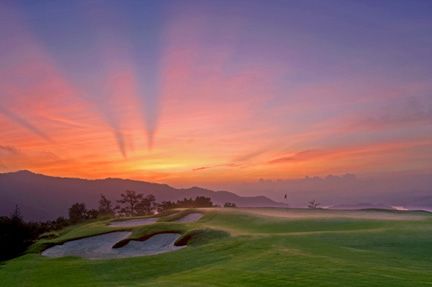
The 7th on the Sorenstam course, Mission Hills, China

“Here’s an idea for a new Top 50 list,” writes the 14-handicap owner of a restaurant on Spring Street in NYC. “You could rank the world’s Mission Hills courses. I mean, there must be a thousand of them.”

A thousand? Well, maybe — if you count “Mission Hills Labradoodles,” one of the Google options that popped up as I typed “Mission Hills” into the search box. (“We are a small breeder of Australian Labradoodles located in the heart of America,” reads their home page. “Our goal at Mission Hills Labradoodles is to raise top quality dogs that will be a joy and an asset to your home and family.”)

Add the word “golf” or “country club” and you narrow the search to a few dozen courses from Texas to Thailand. There is a Packard & Packard-designed Mission Hills C.C. in Northbrook, Ill. and an Al Watrous-designed Mission Hills G.C. in Plymouth, Mich. There is an admirable Mission Hills C.C. about a mile from the Top 50’s Kansas City headquarters. (Situated in the aptly named town of Fairway, Ks., this Mission Hills track was laid out by Tom Bendelow, the Johnny Appleseed of American golf. Bendelow is best remembered for Medinah Country Club No. 3, site of next year’s Ryder Cup.)
If we were to create a Mission Hills list — and all that’s holding us back is a lack of outside funding — the top spot would have to go to the one Mission Hills layout that is already in the Top 50. That would be Desmond Muirhead’s 44th-ranked Tournament Course at Mission Hills Country Club in Rancho Mirage, Calif., permanent site of the LPGA’s Kraft Nabisco Championship.

But given our correspondent’s Chinatown address, I’m guessing that she’s carrying water (or oolong tea) for the Mission Hills Golf Club of Shenzhen, China. A resort complex that is roughly the size of Delaware, China’s Mission Hills has the largest tennis center in Asia (51 courts and a 3,000-seat stadium court), several golf academies, four clubhouses, four spas, a convention center, a 5-star hotel, and no less than a dozen courses designed by the likes of Pete Dye, Jack Nicklaus, Greg Norman, Nick Faldo and Annika Sorenstam. Mission Hills is so big that it isn’t content hosting the Asian Amateur Championship and the occasional World Cup. It sponsors football matches between world-class teams such as FC Barcelona and, uh … opponents of FC Barcelona.

Photo of Olazabal course, Mission Hills China

The 3rd at the Olazabal Course, Mission Hills, China

The helmsman of this golfing supertanker is Tenniel Chu, executive director of Mission Hills Properties Holdings Ltd…, a really big outfit. “Golf is the fastest growing sport in China,” Mr. Chu told me at this year’s Masters, where I chatted up a number of international golf titans before playing second-ranked Augusta National Golf Club as a guest.* “By 2020,” Mr. Chu continued, “China will have the world’s largest population of golfers.”

*I am not a member of either club, although I would never rule out a future alliance.

It is not lost on me that China, with a population of roughly 1.3 billion souls, might have a golf course worthy of a Top 50 ranking. Unfortunately, our Chinese course-raters/calligraphers submit their reports in the 50-year-old simplified Chinese character system employing the common caoshu shorthand variants, while our Cal Tech analysts read only traditional Chinese characters, which use standardized forms dating to the Han dynasty. That has led to some anomalous results, including the counter-intuitive ranking of the aqua-range at the Chung Shan Hot Spring Resort at No. 64, ahead of the world-renowned Pine Valley Golf Club of southern New Jersey.

We’ve got our best minds working on this problem. In the meantime, we’re provisionally ranking the Mission Hills Shenzhen complex — all twelve courses, including the Zhang Lianwei-designed par-3 course — as No. 1 in China.

2 Comments

Filed under golf

New Richmond GC Moves Up List

It is a good nine months since Sports Illustrated senior writer Gary Van Sickle called Wisconsin’s New Richmond Golf Club “the Augusta National of small-town courses,” but praise for the Willie Kidd/Don Herfort design has not abated. The Minneapolis Star-Tribune hails New Richmond’s semi-private Old Course as “perhaps the greatest relatively unknown public course near the Twin Cities,” and Cowboytuff gives it a four-star rating on golflink.com. Now the Little Course that Could has put a move on Wisconsin’s other nationally-ranked track, the Straits Course at Whistling Straits, by moving up to No. 25 in the Top 50.

New Richmond Golf Club photo

"Springtime for Littler" -- the 1st tee at New Richmond GC (John Garrity)

Some will find the comparison to Augusta National Golf Club, No. 2, a stretch, but I have recently played both New Richmond and the National, and found each to be evocative of the other. Both, for instance, are famous for their plantings. Flowering trees frame their greensites, and each presents a variety of flora calculated to send the hearts of botanists racing. (“Driving down Magnolia Lane melts down your spikes,” Greg Norman once said. “You can’t tee off quickly enough.”) The two clubs also have three- or four-hole stretches known as “Amen Corner” — although New Richmond’s is pronounced AH-men by some of its members.

You get religion a little earlier in the round at the Wisconsin course. New Richmond’s most challenging stretch, holes 4 through 7, is anchored by the 406-yard, par-4 fifth hole. A classic floodplain hole — lined with pines and firs on the right and defined by the sinuous Willow River and a marsh on the left — the fifth calls for a thread-the-needle drive and an over-the-water mid-iron past a couple of top-heavy trees eager to lean in the way of perfectly hit approaches. Van Sickle, when asked to compare New Richmond’s signature hole to the lakeside par-4 16th at nearby Hazeltine National Golf Club, said, “I suppose you could compare them….” — and Johnny Miller once called Hazeltine’s 16th “probably the hardest par 4 I ever played.”

I could go on listing the similarities between Augusta National and New Richmond, but I’d rather point out the most significant difference: Their pedigree. The Georgia course started out as a nursery and was nannied to greatness by the regal combination of Grand Slam champion Bobby Jones, legendary course designer Alister MacKenzie and imperious club chairman Clifford Roberts. New Richmond’s stunner had more modest beginnings in the Coolidge-era* as a 9-hole, laid-out-on-a-weekend, concrete-tees-and-sand-greens golf course. In fact, my father** used to call his home-town nine “the worst damn course in the whole state of Wisconsin.”

*Donald Reppe’s The New Richmond Golf Club: A History dates the club to 1924, based upon recorded deeds, diaries and the memories of old timers. Today’s club members, however, wear caps with “Founded 1923” printed on the side, and certain Web sites give 1922 as the inaugural year. (Warren G. Harding, 29th president of the United States, served from 1921 until his death from a heart attack on August 2, 1923.)

**John B. “Jack” Garrity, grew up in New Richmond, helped build the original sand-greens course, and was one of the club’s most avid members in the late twenties. His own monograph, “Remarks and Reminiscences on the Founding of the New Richmond Golf Club,” was excerpted in the Oct. 2007 issue of Travel + Leisure Golf.

Falling to No. 29 is the Pezula Golf Club of Knysna, South Africa.

Top 50 on TV: Nothing this week, but Hall of Fame golfer Annika Sorenstam has signed an agreement to design a championship course for the Olivion Golf Resort in Belek, Turkey. Olivion will be Sorenstam’s first course design project in Europe, her ninth worldwide, and the first to be named for “the powerful being” in a juvenile novel by a writer employing capital letters for his last name. (See “CLE, Troy.”)

Leave a comment

Filed under golf